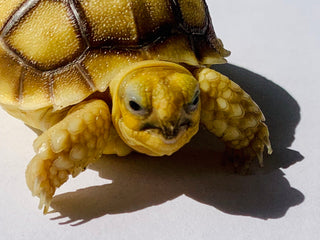
Hatchling Care: The First 90 Days
The first three months are when a hatchling sets its pace for life. Get the basics right now and your sulcata will grow smooth, strong and healthy. Here is everything we tell our own buyers, in one place.
Day 1: When your tortoise arrives
Open the box indoors. Your tortoise has had a long trip and may stay tucked in its shell for a while. That's normal. Give it a lukewarm soak for 10 minutes, then place it in a warm, ready enclosure and let it settle. Don't handle it much for the first few days.
The setup
- Enclosure: a 40-gallon long tank or a tortoise table. Bigger is better.
- Basking spot: a heat lamp at one end making a spot of 90–100°F. The rest of the enclosure stays cooler, so your tortoise can move between warm and cool.
- UVB: a reptile UVB bulb on for about 12 hours a day. Replace it every six months, even if it still lights up. The UV wears out before the light does.
- Humidity: 60–75%. A shallow water dish and a light misting help. Keep the substrate itself from getting soggy.
- Substrate: reptile-safe bedding such as sand, soil or cypress mulch. Avoid pine shavings.
- A hide: somewhere dark to retreat, big enough to walk in and out of easily.
Food
Sulcatas are grazers. Offer fresh greens every day: romaine as a staple, plus dandelion greens, collards, endive and grasses. Dust food with a calcium and vitamin D3 supplement a few times a week. Fruit is a rare treat, not a meal. Feed on a flat rock or an upside-down dish so your tortoise doesn't swallow bedding.
Soaking
Soak your hatchling in lukewarm water, about body temperature, for 5–15 minutes. The water should be shallow, no higher than its chin. Soak daily for the first few weeks, then 2–3 times a week. Soaking keeps them hydrated and helps digestion. Don't worry if your tortoise poops in the water; that's the point.
Weeks 2 to 12: What's normal
- Long sleeps, especially in the first month
- Eating more each week as it settles in
- Basking in the morning, then exploring
- Small, steady growth; weigh it monthly if you like tracking
When to call a vet
Call a reptile vet if your tortoise stops eating for more than a few days once settled, has bubbles at the nose, swollen or closed eyes, or a soft shell.
We're here to help
Questions after your tortoise arrives? Email us at info@sulcatas.com. For more detail, see our full sulcata care guide.